


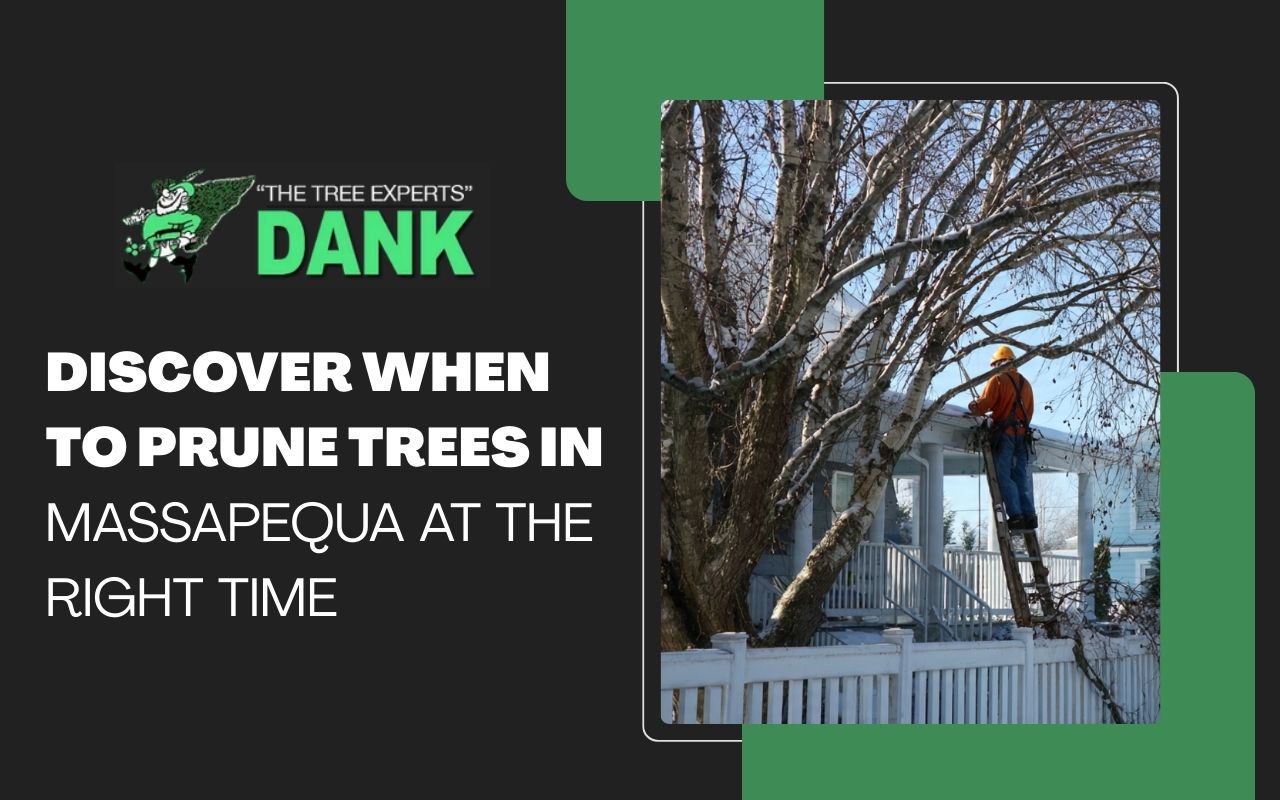
Discover when to prune trees in Massapequa at the right time
Understand the key role that timing plays in tree care. In Massapequa, climate and seasons can change fast. So, knowing when to prune trees matters for health and growth. Also, timing can improve how your yard looks and how long your trees stay strong.
As you learn tree care, think about how seasonal pruning matches a tree’s natural cycle in Massapequa Park. In addition, late winter trimming can help your trees enter spring in better shape. By following ISA standards, you support steady growth, strength, and lasting beauty.
The importance of timing in tree pruning
Knowing when to prune trees in Massapequa is not only about cutting branches. Instead, good timing helps trees close wounds faster. As a result, it can lower disease risk and support fresh growth. Dank Tree Experts often reminds homeowners that timing changes by tree type and weather.
It helps reduce stress on the tree.
It improves light and air through the canopy.
It supports safer, stronger branch shape.
However, prune too early or too late, and you may invite pests or slow growth. Therefore, a simple yearly plan helps you avoid over-cutting and missed deadwood. If you want help planning care, you can reach Dank Tree Experts through the contact page.
Understanding Massapequa’s climate and seasonal shifts
Because Massapequa sits near Long Island’s coast, winters are often mild and summers feel warm and damp. So, these swings shape tree growth each year. In many cases, buds start forming as temperatures rise in early spring. That is why late winter trimming often fits well before new growth starts.
Dry winter days can help cuts close faster.
Wet spring weather may raise fungus risk.
Steady warmth can speed up new shoots.
Therefore, watching local forecasts can guide your pruning days. In addition, planning care in Massapequa Park helps your trees recover better after each cut. Dank Tree Experts can also guide you on safe timing for your yard.
Benefits of late winter pruning for tree care
Late winter trimming can bring several clear benefits. First, dormant trees often handle cuts with less stress. Also, fewer insects are active, which can reduce pest problems on fresh cuts. As a result, spring growth can start stronger and more even.
You can see the branch shape without leaves.
You can remove rubbing limbs more easily.
You can shape the canopy before buds open.
Even so, each tree is different. So, choosing the best week still depends on species and condition. If you need related help, explore what Dank Tree Experts offers on the more services page.
Aligning with ISA standards for healthy growth
Following ISA standards helps you prune with care and clear limits. For example, many guides suggest removing only a small part of the live crown each year. Also, clean cuts near the branch base help the tree seal the cut well. Therefore, this approach can reduce stress and lower long-term risk.
Use clean tools to limit spread of disease.
Make smooth cuts to avoid torn bark.
Focus on structure, not heavy removal.
In addition, using ISA standards supports safer trees near homes and sidewalks. Dank Tree Experts follows these rules to help protect both trees and property.
Pruning methods for different tree types
Different trees need different cuts. So, fruit trees may need shaping for light, while shade trees may need balance for strength. Also, young trees often need structure work, while older trees may need safety trimming. Therefore, the goal should match the tree’s age and purpose.
Moreover, seasonal pruning should respect the tree’s natural rhythm. In many yards, a light yearly trim works better than rare heavy cuts. Dank Tree Experts can help choose a plan that fits your tree type and your goals.
Signs that show it is time to prune
Regular checks can help you spot problems early. For instance, dead branches can fall and cause damage. Also, crowded limbs can rub and create open wounds. As a result, quick action can prevent bigger issues later.
Dead or broken limbs with no green under bark.
Branches that cross, rub, or block light.
Fast, weak shoots growing straight up.
So, if you see these signs, plan a trim at the right season. In fact, knowing when to prune trees in Massapequa can keep small issues from turning into costly repairs.
Precautions to take when pruning trees
Safety should always come first. So, wear gloves and eye protection. Also, use a stable ladder on level ground. However, never reach too far, because falls are common. For larger limbs, it is often safer to call a trained crew like Dank Tree Experts.
In addition, clean tools help limit disease spread. So, wipe blades before moving to the next tree. When cutting big limbs, make step cuts to control the drop. Therefore, you avoid bark tears and trunk splits.
Tools and gear you may need
The right tools make pruning easier and cleaner. For small branches, hand pruners can work well. For thicker wood, loppers and a pruning saw help. Also, pole tools can reach higher limbs without a ladder, which can be safer.
Hand pruners for small cuts.
Loppers for mid-size limbs.
Pruning saw for larger branches.
Moreover, keep tools sharp and clean for smooth cuts. Dank Tree Experts uses pro-grade gear to reduce strain on trees and improve results.
Consulting local arborists for guidance
Local pros understand common trees and local weather patterns. So, they can suggest a schedule that fits your yard. Also, they can spot early disease signs or weak structure before it gets worse. Therefore, a visit can save time and reduce risk.
In addition, a trained team can handle tall or risky jobs safely. If you want support, reach out to Dank Tree Experts and ask about the best timing for your trees. Knowing when to prune trees in Massapequa is easier with expert input.
Frequently Asked Questions
When is the safest season for seasonal pruning in this area?
In many cases, late winter trimming is safer because trees are dormant. However, it depends on the tree type and condition.
Does pruning during wet weather raise disease risk?
Yes, sometimes. So, dry days can be better because cuts may close faster and fungus risk can drop.
How do ISA standards help homeowners?
They guide safe cutting and limit heavy removal. As a result, trees can stay stronger and recover better.
Should I prune trees right after a storm?
Sometimes you should remove broken limbs soon. However, avoid heavy shaping until the right season returns.
How do I know when to prune trees in Massapequa for my specific tree?
Check for deadwood, rubbing limbs, and weak growth. Also, ask Dank Tree Experts for advice on timing and method.
Improve tree health and beauty with the right plan
Good pruning can improve airflow and reduce disease risk. Also, it can shape trees for better balance. Therefore, a steady plan helps your yard stay safe and attractive. By combining seasonal pruning with ISA standards, you support long-term strength and cleaner growth.
Most importantly, remember when to prune trees in Massapequa depends on your tree’s needs and local weather. So, plan ahead and keep cuts light and smart. For help with timing or safe trimming, Dank Tree Experts can guide you through the best next step.