


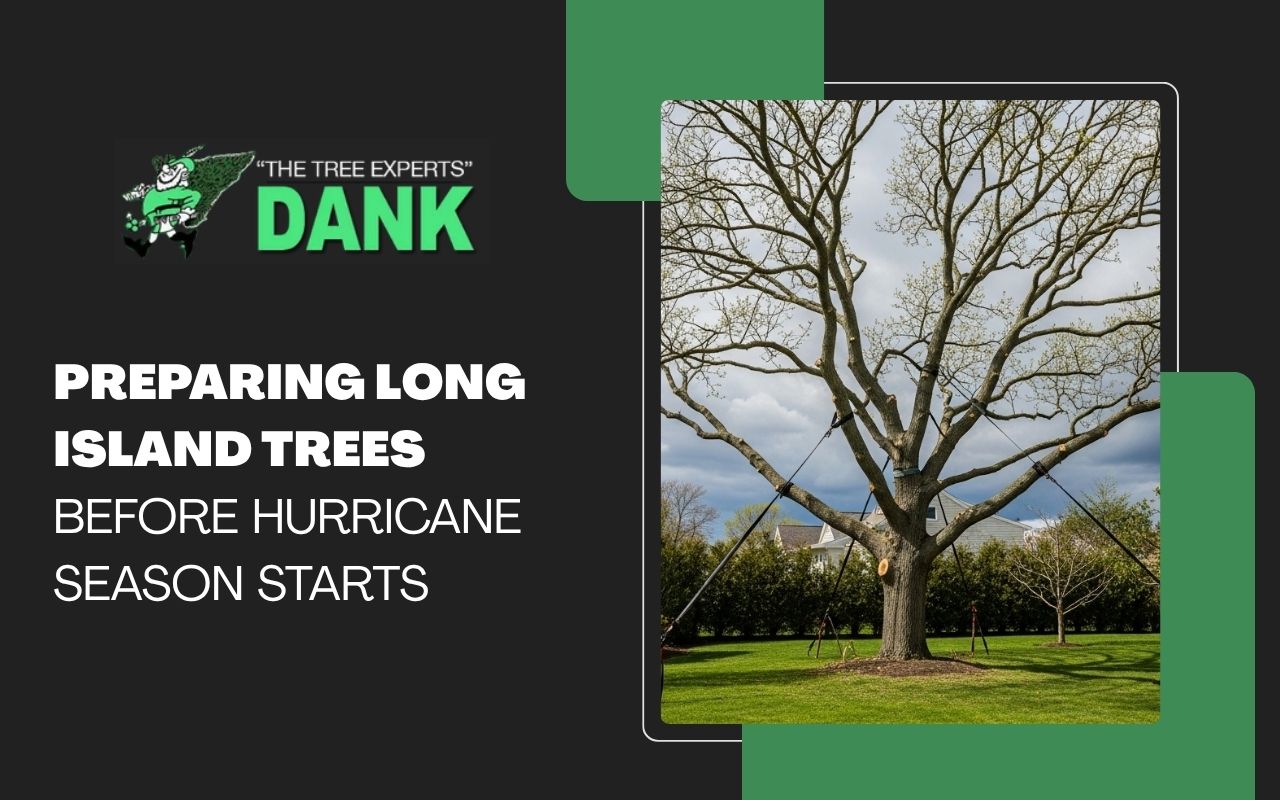
Preparing Long Island Trees Before Hurricane Season Starts
When we explain how to prepare trees for hurricane season on Long Island, we focus on safety, tree health, and peace of mind. As storms get closer, small steps now can lower risk around your home and yard.
At Dank Tree Experts, we help homeowners act early, trim wisely, and spot trouble before high winds arrive. As a result, your landscape can stay stronger, cleaner, and easier to manage through rough weather.
Why Early Tree Care Matters Before Coastal Storms
First, how to prepare trees for hurricane season on Long Island starts with early action. During spring and early summer, storm tree prep gives you more time to fix weak areas before the weather turns dangerous.
Also, healthy trees can block wind better and protect your yard. However, neglected limbs may break fast and damage roofs, cars, fences, or nearby walkways during a major storm.
Check Tree Health And Root Stability First Today
Next, inspect the trunk, bark, roots, and leaves before storm season begins. In addition, look for decay, splits, hollow areas, bare spots, and leaning trunks that may signal hidden problems.
Look for mushrooms, cracks, or peeling bark near the trunk base.
Check whether the soil is lifting or moving around roots.
Notice thin leaves, dead tips, or a lean that seems worse.
Likewise, this step supports spring tree safety because it helps you catch stress early. If something looks off, our team can review it before conditions become more risky.
Spot Risky Limbs Before Strong Coastal Winds Arrive
Then, examine branches that cross, split, hang low, or grow at tight angles. A careful weak branch inspection can reveal parts that may snap when strong gusts hit your property.
Also, pay close attention to limbs near driveways, roofs, power lines, and patios. Even small branches can cause serious trouble when wind throws them across the yard.
Pruning Steps That Help Trees Handle Heavy Gusts
After that, how to prepare trees for hurricane season on Long Island includes careful trimming. Preventive pruning removes dead or rubbing limbs, opens the canopy, and helps wind move through the tree more evenly.
Remove broken, dead, or crowded branches with clean cuts.
Keep the canopy balanced so weight stays more even.
Trim early enough to avoid rushed work before a storm.
Moreover, good trimming lowers stress on large limbs and reduces breakage. For local help, visit our tree trimming team in Massapequa.
Support Young Trees With Smart Ground Protection Methods
Meanwhile, younger trees often need extra help because their roots are still settling. So, stakes, soft ties, mulch, and deep watering can improve wind damage prevention without limiting healthy movement.
Also, keep mulch a few inches from the trunk and water deeply during dry weeks. This simple care helps roots grow down and hold better during rough weather.
Build A Simple Plan For Fast Storm Response
Furthermore, how to prepare trees for hurricane season on Long Island means staying organized. An emergency tree checklist helps you track inspections, trimming dates, support systems, and service contacts before a storm warning appears.
Write down trees that need review, trimming, or support.
Save photos so you can compare changes after each storm.
Keep our contact page ready for quick help.
At Dank Tree Experts, we believe a simple written plan reduces stress when weather alerts arrive. As a result, you can act faster and avoid last-minute decisions.
Watch Tree Changes During Active Storm Months
During the season, check trees after strong wind or heavy rain. Likewise, watch for fresh cracks, lifted soil, hanging limbs, or ties that became too tight.
Then, respond quickly when you notice change. Small issues are often easier and safer to fix before they grow into larger hazards.
Frequently Asked Questions
When should I start preparing my trees?
Ideally, start in spring before forecasts become more severe. Early care gives you time to inspect, trim, and support trees without rushing.
Can I prune trees right before a storm?
Usually, rushed trimming is not the best choice. Instead, plan early so cuts are safe, clean, and focused on the right branches.
How do I know a branch is dangerous?
Generally, look for dead wood, deep cracks, low hanging limbs, and narrow branch angles. These signs often point to a higher chance of failure.
Should young trees be staked every year?
Not always. However, recently planted trees may need short-term support until roots grow stronger and the trunk can move naturally on its own.
When should I call a professional tree team?
Right away, call for help if a tree leans more, has large dead limbs, touches wires, or stands close to your home after rough weather.
Keep Long Island Yards Safer Through Every Season
Finally, how to prepare trees for hurricane season on Long Island is really about steady care, smart timing, and clear planning. With regular checks, clean trimming, and fast action, your trees can stand stronger when coastal storms arrive.
At Dank Tree Experts, we are ready to help you protect your trees, home, and outdoor space. Therefore, your yard can stay safer, healthier, and better prepared all season long.